In the kitchen with MyTrela
How to read food labels
The front of a package helps you find a product, but the label lets you compare its ingredients and the amount you will use in the kitchen. Learn to read it in a consistent order: name, ingredients, nutrition table, serving and storage conditions.
Start with the product you actually need
Before buying, look at the name of the food and then the description of the variety. Plain cream cheese and cream cheese with added ingredients may look similar, but they serve different purposes in a recipe. Also check whether you are buying a dry product, a cooked product, a concentrate or a preparation mix. The colour of the packaging alone will not answer these questions.
It helps to make a short note from the recipe: ingredient name, required weight and weighing stage. “120 g after draining” calls for a different purchase from “120 g of product including the liquid”. If the recipe requires a dry product, do not apply that weight to a ready-made pouch version. First establish what should go into the bowl or saucepan.
On a typical EU package, information includes the ingredients list, allergens, net quantity and nutritional values, among other details. The rules and exceptions are described in Regulation 1169/2011. This guide shows how to use that information when shopping for everyday cooking.
Compare on the same basis
Look for the column referring to 100 g or 100 ml in the nutrition table. Only then compare similar products. There may also be a column for the manufacturer’s serving, but that serving does not necessarily match the amount you will actually eat. Comparing two different serving sizes can reverse the apparent result.
To calculate an individual value, multiply the value per 100 g by the weight of the product you are using and divide by 100. Use the unit given in the table. If the label provides figures per 100 ml and the recipe calls for grams, do not automatically assume that every liquid converts in the same way as water.
| Product | Carbohydrates per 100 g | Manufacturer’s serving | Carbohydrates in that serving |
|---|---|---|---|
| Product A | 8 g | 25 g | 2 g |
| Product B | 6 g | 50 g | 3 g |
Product B has fewer carbohydrates per 100 g, although its larger serving contains more. This is a calculation exercise, not an assessment of particular products or a recommended serving size.
Read carbohydrates, sugars and fibre separately
In a Polish nutrition table, “of which sugars” is included in the “carbohydrate” figure. Do not add these numbers together. If the label states 12 g of carbohydrates, of which 3 g are sugars, the carbohydrate content is 12 g, not 15 g. The sugars entry does not refer solely to sugar added during production.
In the EU system, fibre is listed separately. Do not subtract it again from the carbohydrates shown on a Polish label. For a hypothetical product with 7 g of carbohydrates and 5 g of fibre per 100 g, the reading remains 7 g of carbohydrates. A result of 2 g would come from applying the wrong method.
The American “Total Carbohydrate” entry also includes fibre, as the FDA explains. Do not automatically transfer “net carbs” instructions from an American website to a European package. If a product is imported, check which system the table you are reading uses. Do not devise your own shortcut of subtracting all polyols, either.
Check the ingredients and highlighted allergens
Ingredients are generally listed in descending order of the weight used in production. Allergens on the EU list should be highlighted in the ingredients list. The Polish Ministry of Agriculture and Rural Development provides rules and examples. The order helps you understand the product, but it does not give the exact weight of every ingredient.
For mixtures, read the ingredients in brackets too. A seasoning blend, sauce or ready-made pesto may contain several products that are not apparent from its short name. If a recipe calls for a particular ingredient, check that the version you choose still meets that need. “Natural” or “fit” wording does not replace the ingredients list.
If you need to avoid an allergen, assess the entire label, including information about possible contact during production. A recipe collection name, such as “egg-free”, describes the recipe ingredients; it does not confirm the safety of every shop-bought product. If packaging is unclear, seek an explanation from the manufacturer instead of guessing from the picture.
Apply the figures to the ingredient used in the recipe
Imagine an invented yoghurt with a label stating 4 g of carbohydrates per 100 g. If you weigh out 150 g of that yoghurt, the calculation is 4 × 150 ÷ 100, or 6 g. This information applies only to the measured amount of yoghurt. It is not the value for the whole breakfast, to which you will add fruit and other ingredients.
Follow a similar process with a canned product, but first read the note alongside the table. The figures may refer to the drained product or to the contents including the liquid. Net weight and drained weight describe quantity; they do not automatically explain the basis of all the nutritional values.
When recording figures, keep the full name of the variety and a photo of your own label. “Coconut milk” alone may not be precise enough. If you later buy a different version, return to its nutrition table. Do not assign the previous figures to a new package simply because the ingredient has a similar name.
Plan when to open and use the package
The amount you will actually use is helpful when comparing prices. For cans, distinguish between the contents including the liquid and the amount of the ingredient after draining. A large package is not always more convenient if the recipe needs only a small part and you have no planned use for the rest.
Read the storage conditions and instructions after opening. Keep this information with your shopping list if you are preparing meals ahead. The date on a sealed package should not be treated as a complete set of storage instructions for a product that has already been opened. Keep the label accessible in the kitchen instead of immediately discarding it with the packaging.
A practical note can have three columns: “how much I need”, “how much will remain” and “how I will use the rest”. This makes shopping easier without inventing nutritional values or basing decisions on the wording on the front of the product.
Use a short checklist at the shelf
- Confirm the name and form of the product required by the recipe.
- Read the ingredients, allergens and other relevant warnings.
- Compare similar products in the per-100-g or per-100-ml column.
- Check your own serving and the basis of the figures for products packed in liquid.
- Assess the amount needed, leftovers and conditions after opening.
On your first shopping trip, follow this process for two or three ingredients you use most often. On later trips, return to the label when the brand or variety changes. The aim is to buy the right product and measure a serving deliberately, rather than give every package a single rating based on one number.
Recipes on MyTrela
Number of recipes: 3
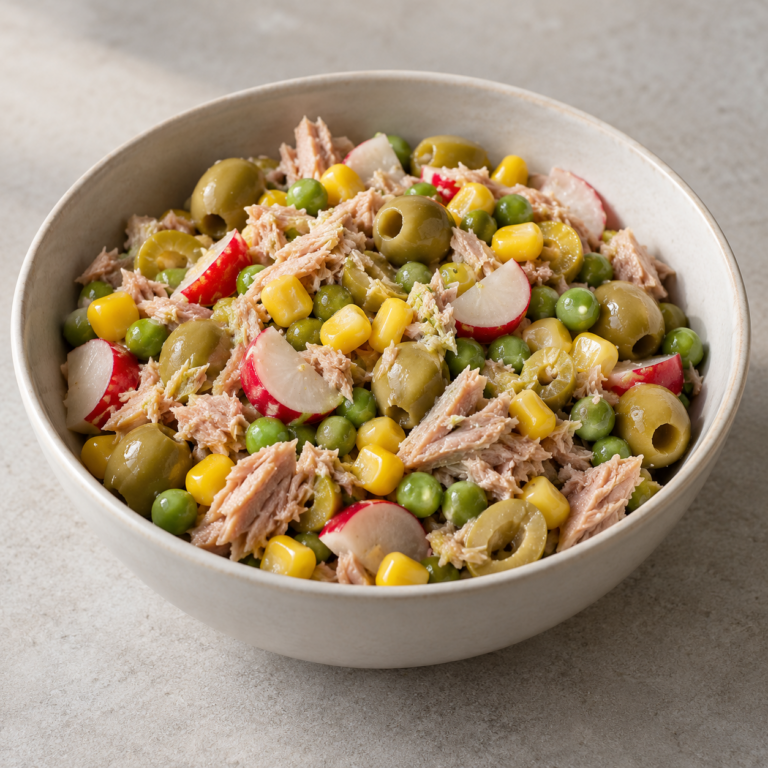
Tuna with peas, sweetcorn and radish
Drained tuna, sweetcorn, peas and stoned olives make a salad with radish. After mixing, add separately weighed linseed oil.
View recipe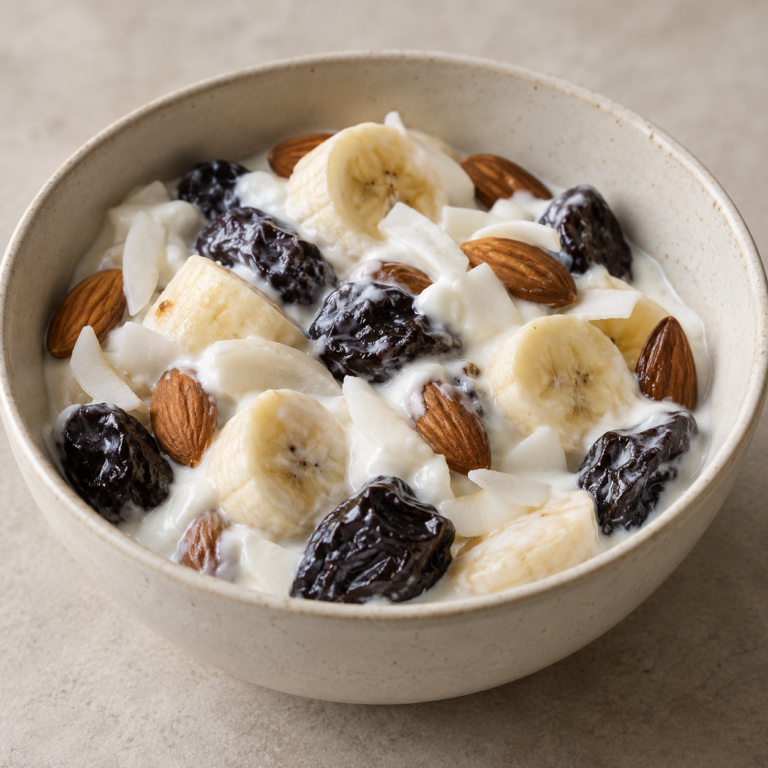
Yoghurt with banana, prunes, almonds and coconut
Plain yoghurt is combined with banana and prunes. Almonds and coconut chips are part of the same mixture.
View recipe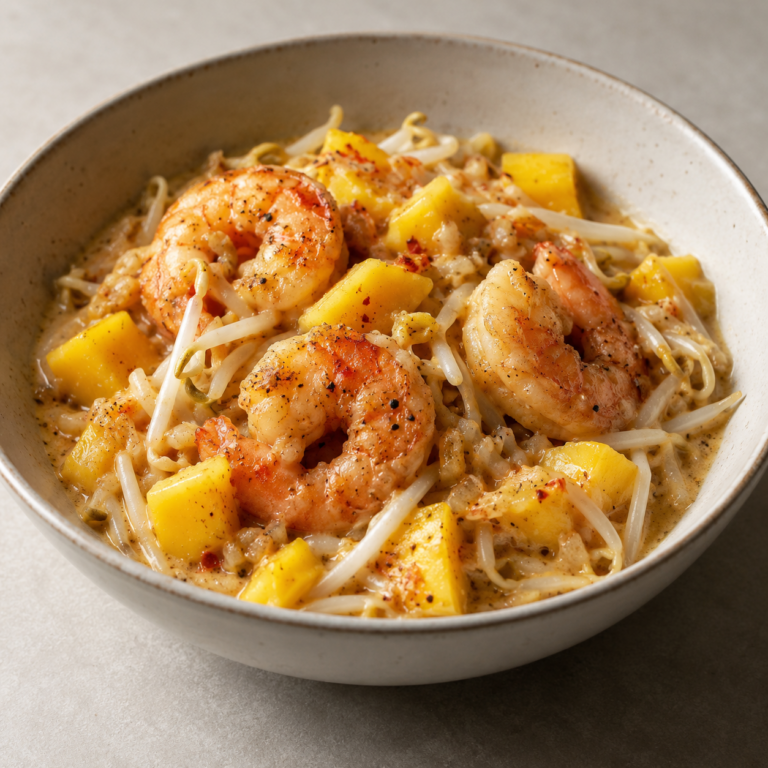
Prawns with mango and sprouts in coconut sauce
Garlic and onion begin cooking in the pan. Mango, mung bean sprouts and coconut milk join the prawns later.
View recipeImages generated for MyTrela show serving suggestions. The recipes have not been kitchen tested; nutritional values and total preparation times have not been verified.
Sources and further reading
- EU Regulation 1169/2011 — food information, nutritional values and definitions
- Polish Ministry of Agriculture and Rural Development — traditional labels: ingredients, allergens and net quantity
- FDA — Total Carbohydrate on the American Nutrition Facts label
- Topic inspiration: Ruled.me — guides to ingredients and kitchen planning
Prepared by MyTrela with AI assistance. The source links identify materials used in preparing this content.


